Concrete Spalling: Causes, Risks, and Repair Options
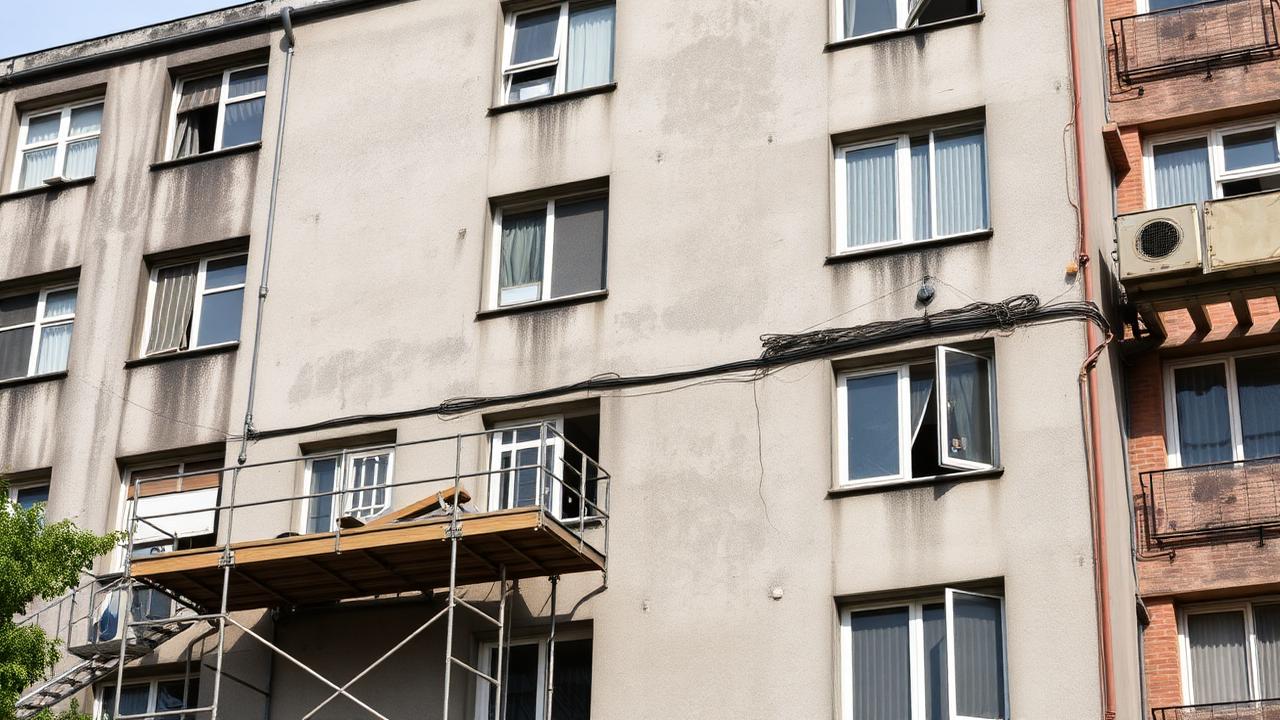
Concrete spalling is the flaking, chipping, or breaking away of concrete from a structural element, almost always caused by corrosion of the embedded reinforcing steel. It is a leading indicator of structural deterioration on coastal Florida buildings and requires engineered repair — not a cosmetic patch.
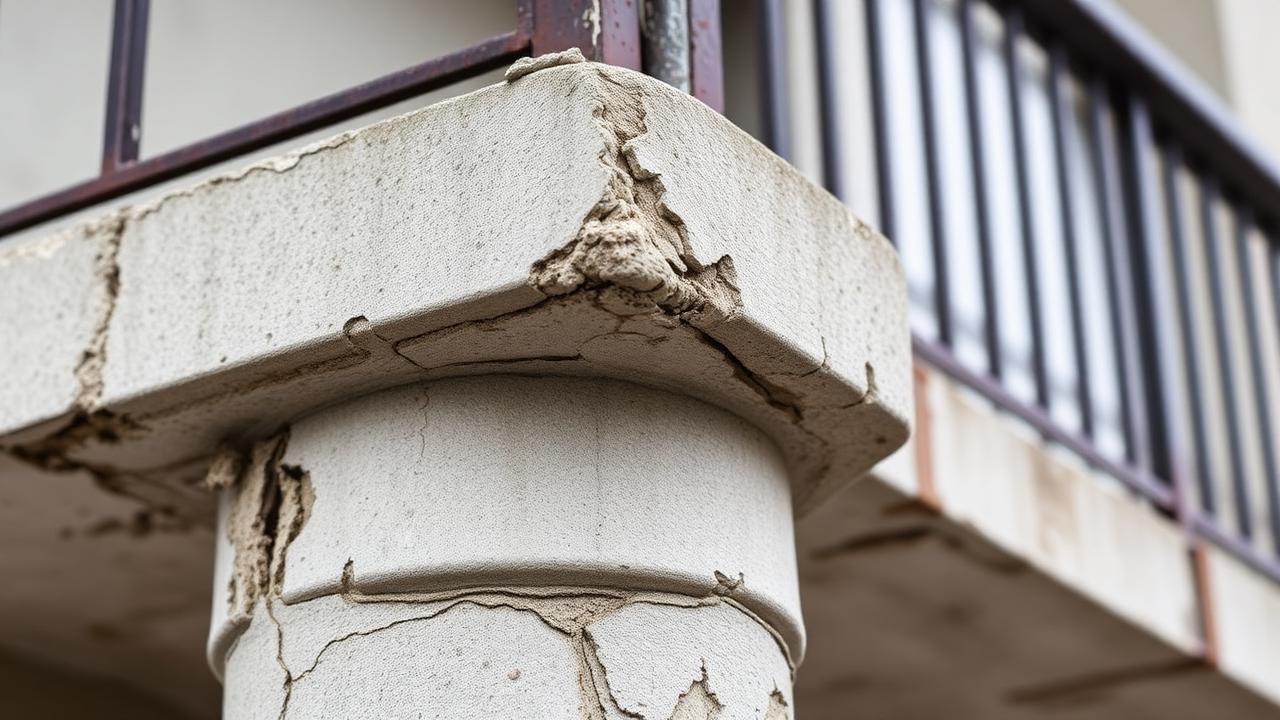
If you've ever seen a rust-stained chunk of concrete fall from a balcony soffit, you've seen spalling. It's one of the most common — and most misdiagnosed — structural conditions in coastal Florida buildings.
What is concrete spalling?
Spalling is the progressive flaking, chipping, or breaking away of concrete from a structural element. The concrete itself is rarely the problem. The cause, in almost every case, is corrosion of the reinforcing steel embedded inside it.
Why does steel corrode inside concrete?
Healthy concrete is alkaline, which forms a passive oxide layer on the embedded steel and prevents corrosion. Over time, two processes break down that protection: carbonation, where atmospheric CO₂ neutralizes the concrete's alkalinity, and chloride ingress, where salt from coastal air or de-icing chemicals penetrates the cover. Once the steel starts to corrode, the rust expands to several times its original volume, cracking the surrounding concrete from the inside out.
How serious is spalling?
Severity ranges from minor surface defects to structural collapse risk. Light surface spalling on a non-load-bearing element is a maintenance issue. Spalling that exposes reinforcing steel on a balcony slab, column, or beam is a structural issue that warrants immediate engineering evaluation.
What is the engineered repair process?
- Investigation: chain-drag and hammer sounding, half-cell potential survey, chloride profile testing.
- Removal: chip out all unsound concrete to a defined boundary, exposing clean reinforcing steel.
- Steel preparation: clean to a near-white finish, replace any steel that has lost more than the specified section.
- Reinforcement: install supplemental reinforcement where required by the engineer's design.
- Repair material: place an engineered repair mortar or shotcrete with documented bond strength.
- Protection: apply corrosion inhibitor, sealer, or cathodic protection where appropriate.
Should we use cathodic protection?
On coastal buildings with widespread chloride contamination, impressed-current or galvanic cathodic protection can dramatically extend the life of the repair by stopping the corrosion reaction at its electrochemical source. It's not appropriate for every project, but on the right building it is the difference between a 5-year fix and a 25-year fix.
Choosing a contractor
Concrete restoration is unforgiving work. We recommend owners require the contractor to follow ICRI (International Concrete Repair Institute) Technical Guidelines, hire only crews with ACI/ICRI-certified leadership, and engage an engineer for independent quality assurance during the work.
Frequently Asked Questions
- Is spalling covered by insurance?
- Generally no — spalling is considered a wear-and-tear condition. Resulting damage (e.g., a balcony collapse) may be covered depending on the policy.
- How long does a typical balcony restoration project take?
- Plan on 8–16 weeks for a mid-rise building, depending on access, the extent of removal, and weather.
- Can residents stay in the building during restoration?
- Usually yes, with phased balcony access, dust control, and clear communication. Some scopes (column shoring, slab demolition) require temporary relocation of adjacent units.
Related Services
Concrete Restoration
Engineered concrete restoration that extends the life of your structure.
Learn more Structural Assessment, Restoration & RepairShoring Design
PE-sealed temporary shoring for balcony repairs, slab support, and load-bearing wall removal.
Learn more Structural Assessment, Restoration & RepairStructural Conditions Assessments
Comprehensive structural evaluations by licensed engineers.
Learn moreRelated Posts
Understanding Florida's New Milestone Inspection Requirements
Read more about Understanding Florida's New Milestone Inspection Requirements
What is a Structural Integrity Reserve Study (SIRS) and Do You Need One?
Read more about What is a Structural Integrity Reserve Study (SIRS) and Do You Need One?