
Post-Tensioned Slabs: Inspection Best Practices
Post-tensioned (PT) slabs are widely used in Florida mid- and high-rise construction. Inspecting them safely requires understanding how the tendons are stressed, where anchorages corrode, and how to identify distress without compromising the system. Cutting or drilling a live PT tendon is among the most dangerous mistakes a contractor can make.
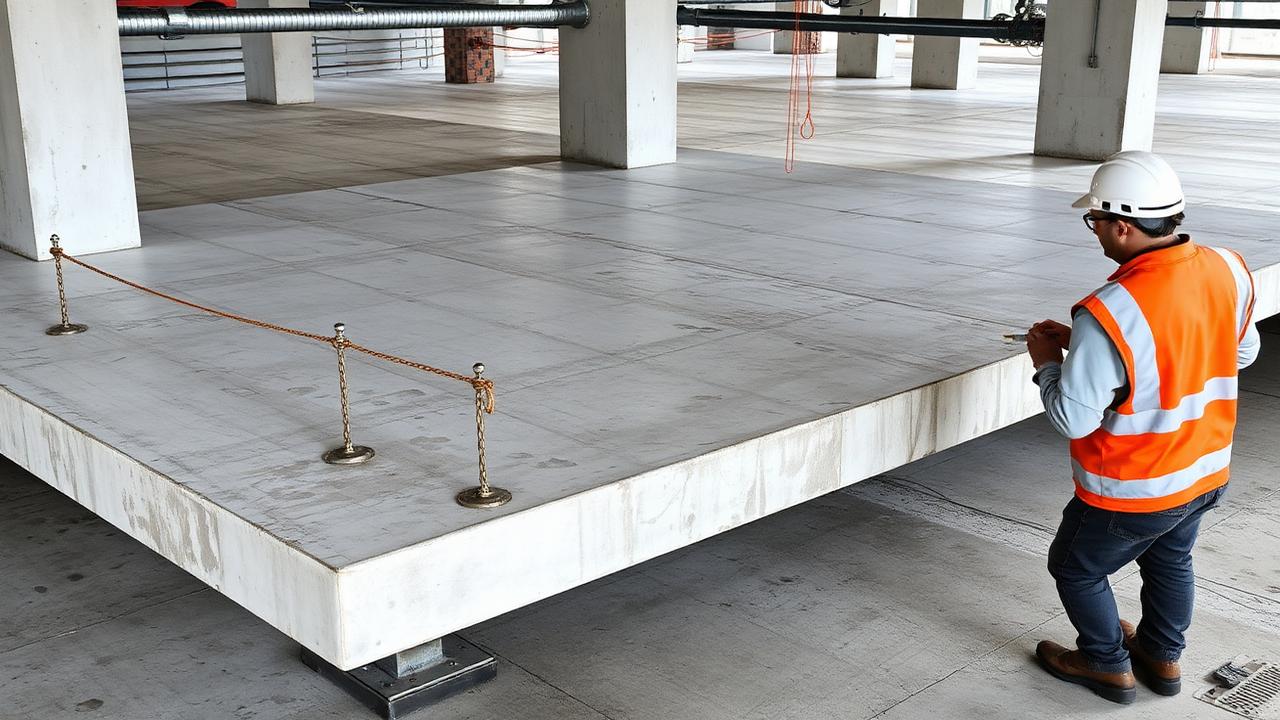
Post-tensioned slabs are the structural workhorse of modern Florida high-rise construction. They span farther, deflect less, and use less concrete than conventionally reinforced slabs. They also fail differently — which is why inspecting them well requires more than a flashlight and a hammer.
What is a post-tensioned slab?
A post-tensioned slab is a concrete slab in which high-strength steel tendons are stressed against the hardened concrete to actively compress it. Compression keeps the slab from cracking and lets it carry loads across longer spans. Tendons can be bonded (grouted inside a duct) or unbonded (greased and sheathed).
Where do PT systems deteriorate?
- Anchorage zones — particularly at slab edges, where chloride exposure is highest
- End-cap details, where moisture infiltrates the tendon void
- Live-end pockets that were never properly grouted or sealed
- Tendon high points, where minor cracks expose the strand to corrosion
- Stressing pockets at construction joints
Field inspection techniques
- Visual and chain-drag survey to map cracking, spalling, and hollow zones.
- Half-cell potential survey to map active corrosion of conventional reinforcement.
- Cover meter and ground-penetrating radar to locate tendons before any invasive work.
- Selective endoscopic inspection at suspect anchorages.
- Tendon extraction and tensile testing where corrosion is suspected and remediation is being scoped.
What does a typical anchorage failure look like?
Most anchorage failures we document start with water intrusion at the slab edge or in an under-grouted pocket. Corrosion progresses along the strand toward the anchor, and the first visible sign is a rust stain or a small spall at the pocket. Left unaddressed, the strand can corrode to the point of brittle failure — often releasing the tendon and producing the characteristic 'spit-out' that is hard to miss.
Documenting findings
Inspection reports for PT slabs should include the inspection methodology, photographs keyed to a slab plan, the location and condition of every observed anchorage, and a clear opinion regarding the structural significance of the findings. Vague reports help no one — and on a building approaching recertification, vague reports can delay closing, lending, or refinancing.
Repair options
Repair scope ranges from local anchor re-stressing and pocket re-grouting to full tendon replacement. Engineered repair must account for the redistribution of forces during the work, which is why every PT repair on our jobs is sequenced, instrumented, and supervised by the engineer of record.
Frequently Asked Questions
- How do I know if my building has PT slabs?
- Original structural drawings will identify them clearly. If drawings are unavailable, an engineer can confirm with non-destructive testing.
- Can a PT building be safely renovated?
- Yes — but every penetration, opening or attachment must be located against the PT layout and designed with the engineer of record.
- How long do PT tendons last?
- Properly detailed and grouted tendons can last the life of the structure. Unbonded tendons exposed to chlorides can deteriorate in as little as 15–25 years if anchorages are not maintained.
Related Services
Structural Conditions Assessments
Comprehensive structural evaluations by licensed engineers.
Learn more Structural Assessment, Restoration & RepairConcrete Restoration
Engineered concrete restoration that extends the life of your structure.
Learn more Building Compliance & InspectionsMilestone Inspections (MI)
Florida-mandated Milestone Inspection services for condos and multi-story buildings under SB 4D.
Learn moreRelated Posts
The Importance of 40-Year Building Recertification
Read more about The Importance of 40-Year Building Recertification
Understanding Florida's New Milestone Inspection Requirements
Read more about Understanding Florida's New Milestone Inspection Requirements